The type of medium that an artist uses, is dependent on their style and preferences. Although the medium can describe a lot about the artist’s background, culture, and personality. From clay to colored pencils, oil or acrylic paint, to ink, to all the other mediums, each one has its own characteristics that make up the art piece made from them. Personally, ceramic clay is my preferred medium because of how unpredictable it can be. This unpredictable trait leads me to experiment with different techniques in the clay itself but also with the glazing process.
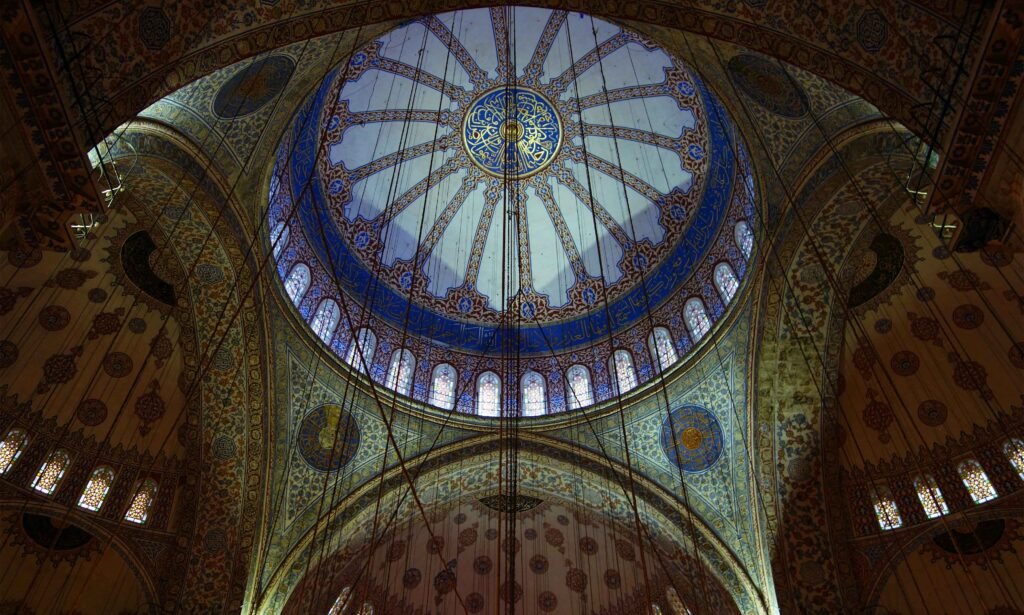
In the Islamic world, mosques are classic symbols of the religion. The design on the mosques differs greatly because of the regional traditions of where it is built. Although, there are many parts to the mosque that are the same overall, like the qubba (dome), mihrab (niche), and the minaret (tower).
https://www.khanacademy.org/humanities/ap-art-history/introduction-cultures-religions-apah/islam-apah/a/introduction-to-mosque-architecture
The qubba is a “symbolic representation of the vault of heaven” (Khan Academy). To emphasize this symbolism, there are intricate designs on the inside of the dome area. Using geometric, vegetation, or stellate (weird patterns) designs to decorate the dome. Other decorative elements in mosques include large calligraphic frieze that praise the generosity of the patron. These friezes can also be quotes from the Qur’an. Also, hanging lamps are an important factor because the first and last daily prayer happens before sunrise/sunset. The light from the lamps also highlights the calligraphy and other decorations that are on the lamp’s surfaces.

https://www.metmuseum.org/toah/hd/pfor/hd_pfor.htm
East Asia has its own set of traditional art. Common art mediums include calligraphy on hand scrolls or hanging scrolls. Handscolls are often viewed in sections. The right edge of handscrolls typically has a piece of woven silk to act as a clasp to secure and close the scroll. Hanging scrolls on the other hand are used for vertical compositions. The images are mounted onto paper backing then framed with decorative silk borders then, attached to a wooden rod. After the scrolls are hung, two pieces of silk streamers are hung from the tops to mimic older banners.
Leave a Reply