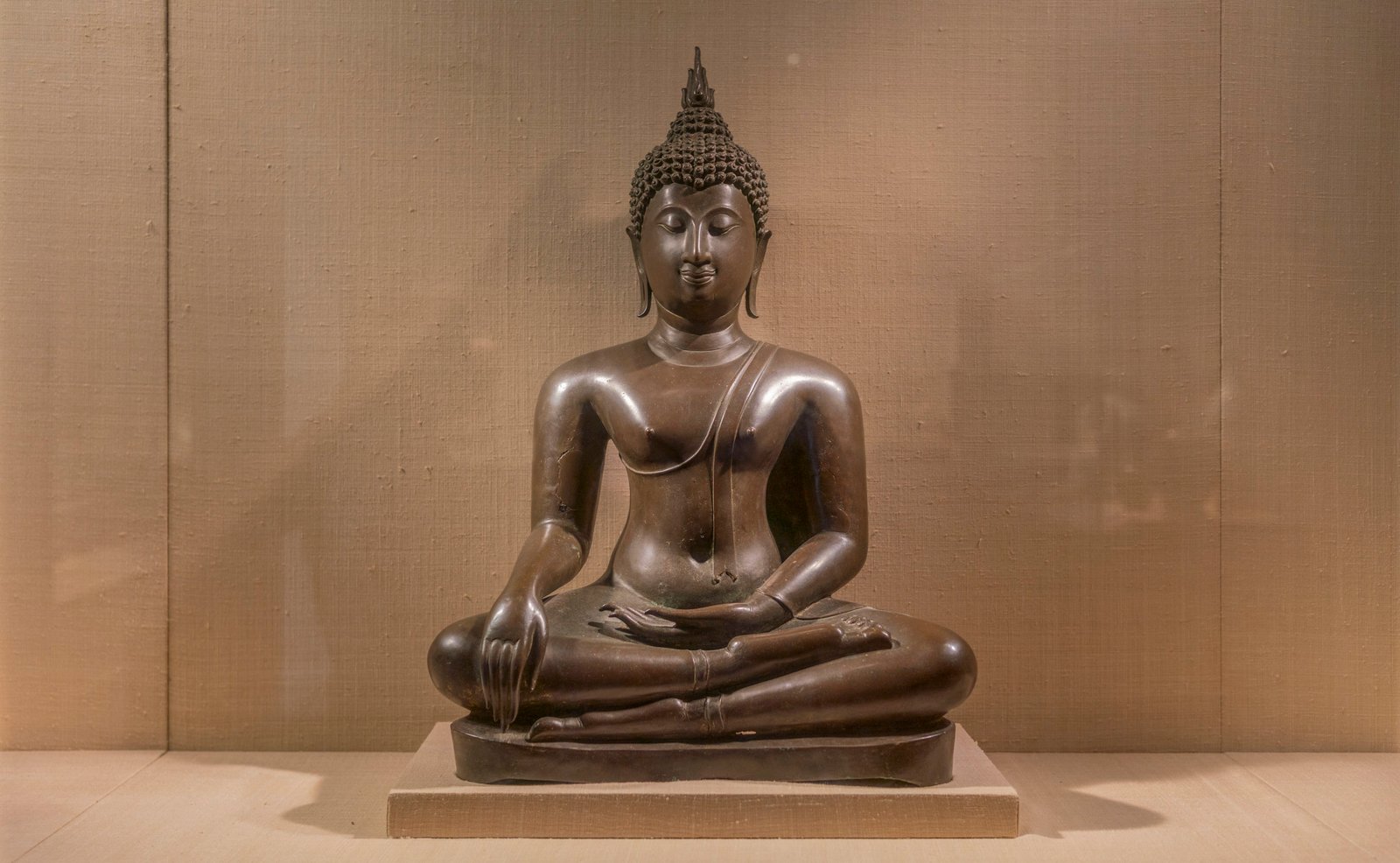
In Southeast Asia, the representation of the human body is by Buddha. Buddhism is the belief that “Man is his own master and there is no higher being or power that sits in judgment over his destiny.” (Khan Academy). To enforce this belief, for the longest time Buddha was not represented as an actual being. It was not until Prince Siddhartha sought a journey to end worldly pain and suffering and the release of cycle of rebirth and death. Once Prince Siddhartha reached enlightenment, he was seen as the “enlightened one” and was the physical representation of Buddha. Before, Buddha was not physically represented because he did not want to claim to be human. This would have been seen as a limit to what we could achieve.

Ancient Korea had similar body representations in that it was not represented by a physical but an inanimate object. The Royal Tombs of Silla house many individuals from Kings, Queens, princes, relatives, and others that were adopted into the royal circle. The tombs represented political authority and culture, but what was buried there represented something else. Items were buried with the people inside, these items ranged from jewels, treasures, swords, and accessories. The meaning behind the items changed depending on the person inside, whether it be their status, gender, or nobility.
Today, we represent the physical body in many ways: gender, sexuality, race, and ethnicity. As opposed to Ancient Korea and Southeast Asia, we use our physical features to represent our mental. By using art and media, we use materials to convey how we feel on the inside. We still use gendered items, but we do not hold them at a tight usage as much as we used to in other words Our expectations for our roles have become looser.
Leave a Reply