In Southern India dominated a city called Vijayanagara. The city was founded by two brothers, Harihara and Bukka. With their army, they were able to protect the city from invasions from nearby kingdoms. By building many religious buildings, Vijayanagara was able to promote the Hindu religion. These buildings were for the people of the empire who held power. For example, the Lotus Mahal, the Queens Bath, and even the elephant stables.
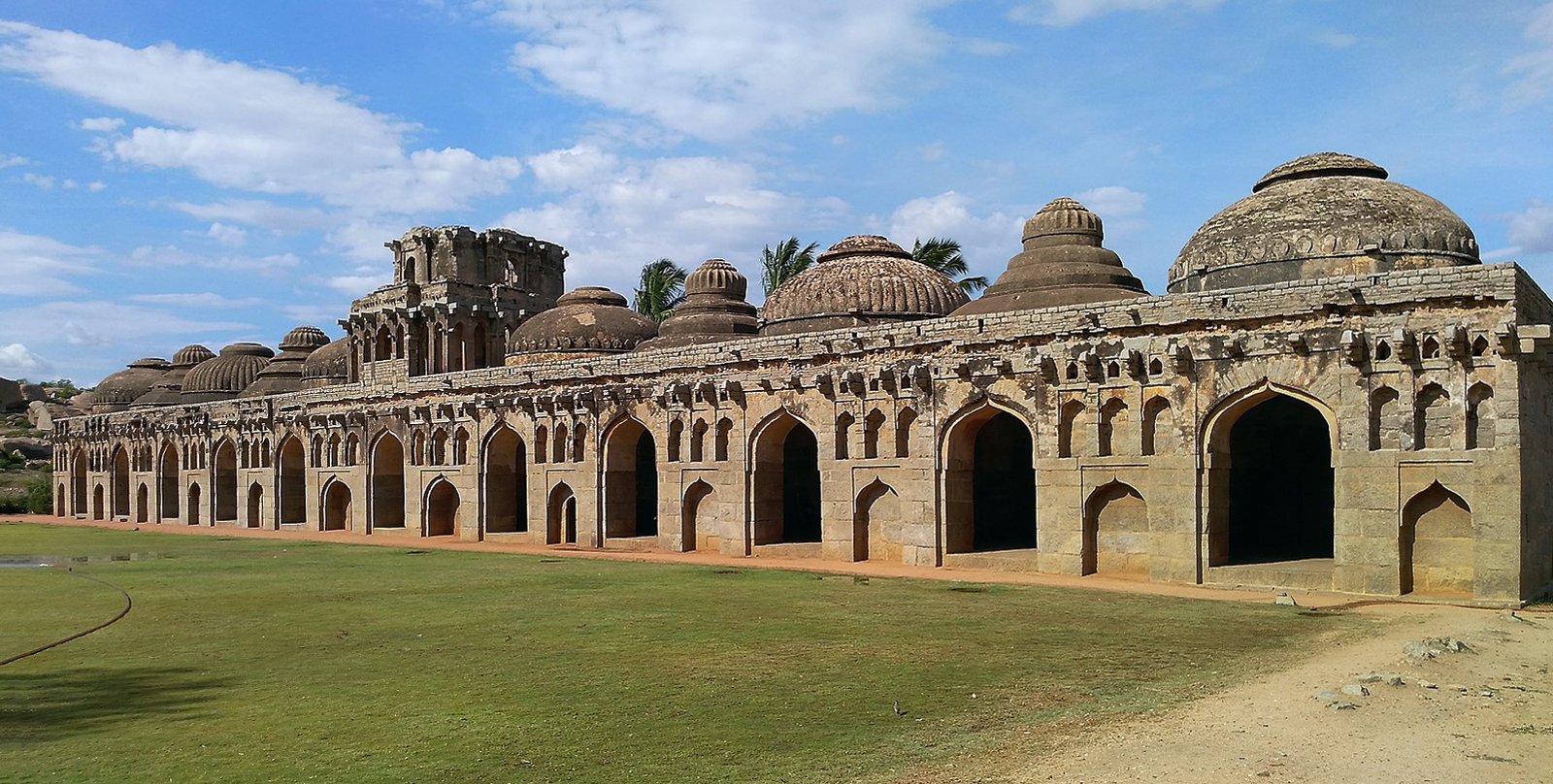
https://smarthistory.org/wp-content/uploads/2021/08/new-stables.jpg
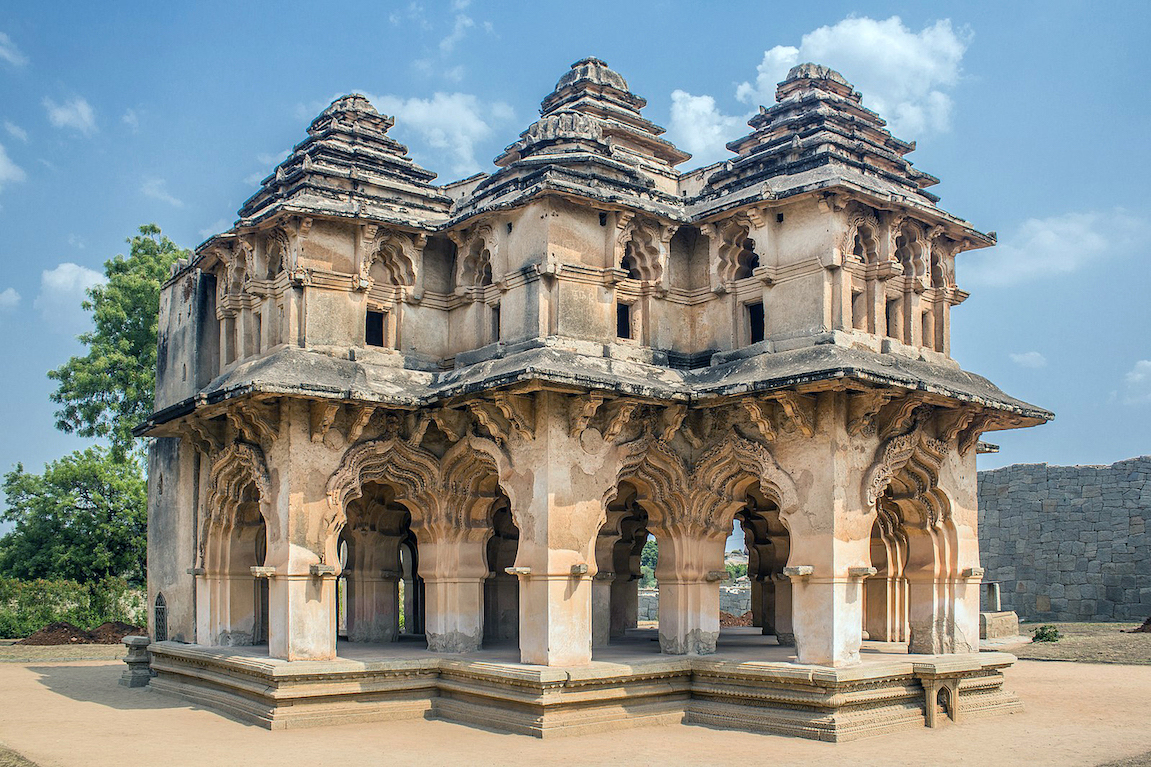
The Lotus Mahal was a reception meeting place for the emperor and his trusted advisors. The style of the Lotus Mahal suggested acceptance within the empire because of its combination of religious architectural designs.
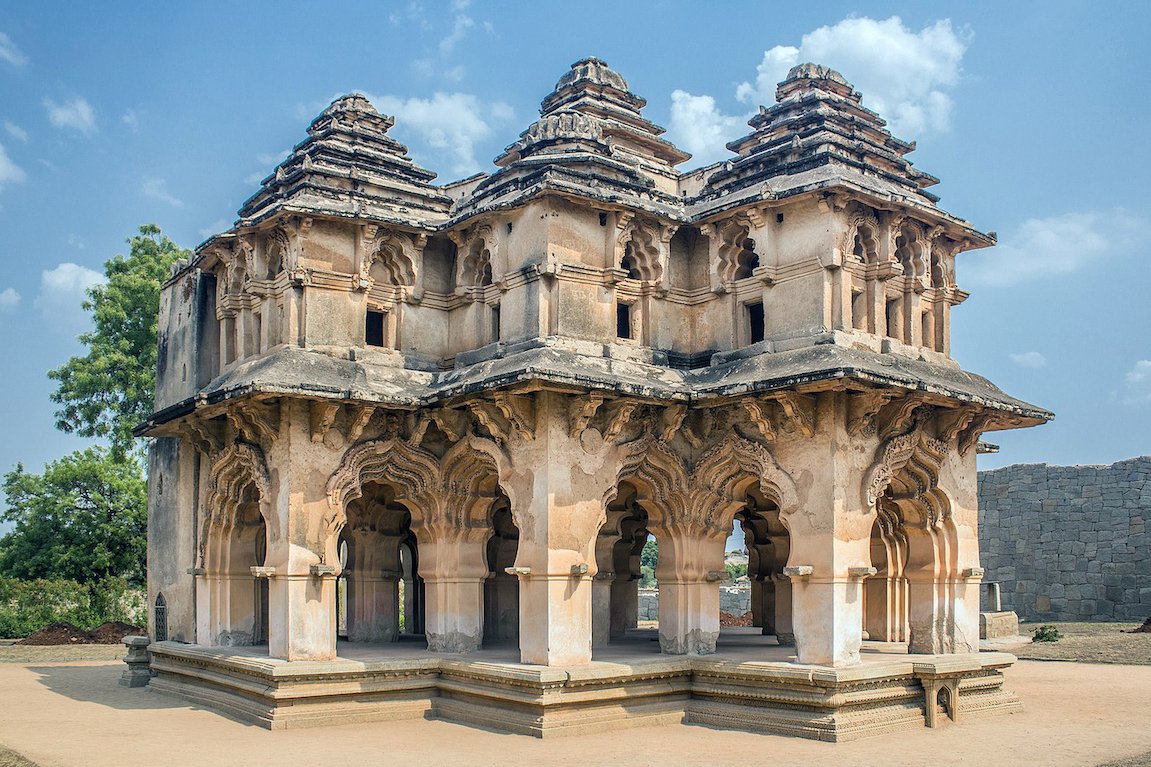
https://smarthistory.org/wp-content/uploads/2021/08/1599px-Lotus_Mahal_Pavilion_MS.jpg
The Queen’s Bath was an open building with “pointed arches, plaster-decorated domes and vaults, and corridors with projecting balconies” that all surrounded a pool that was used for bathing by the royal members. (Smarthistory).
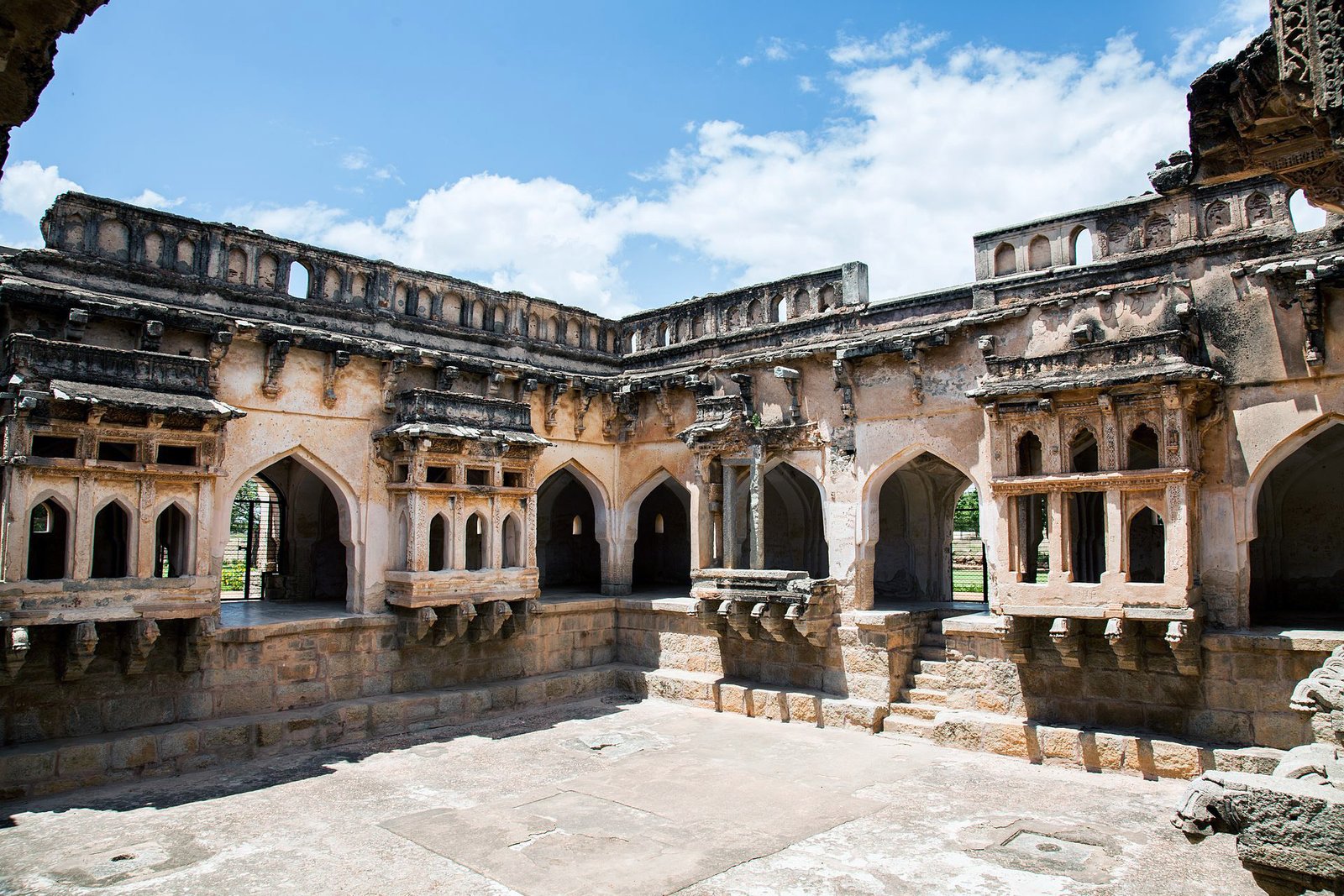
https://smarthistory.org/wp-content/uploads/2021/08/IMG_2272_Queens_Bath-1.jpg
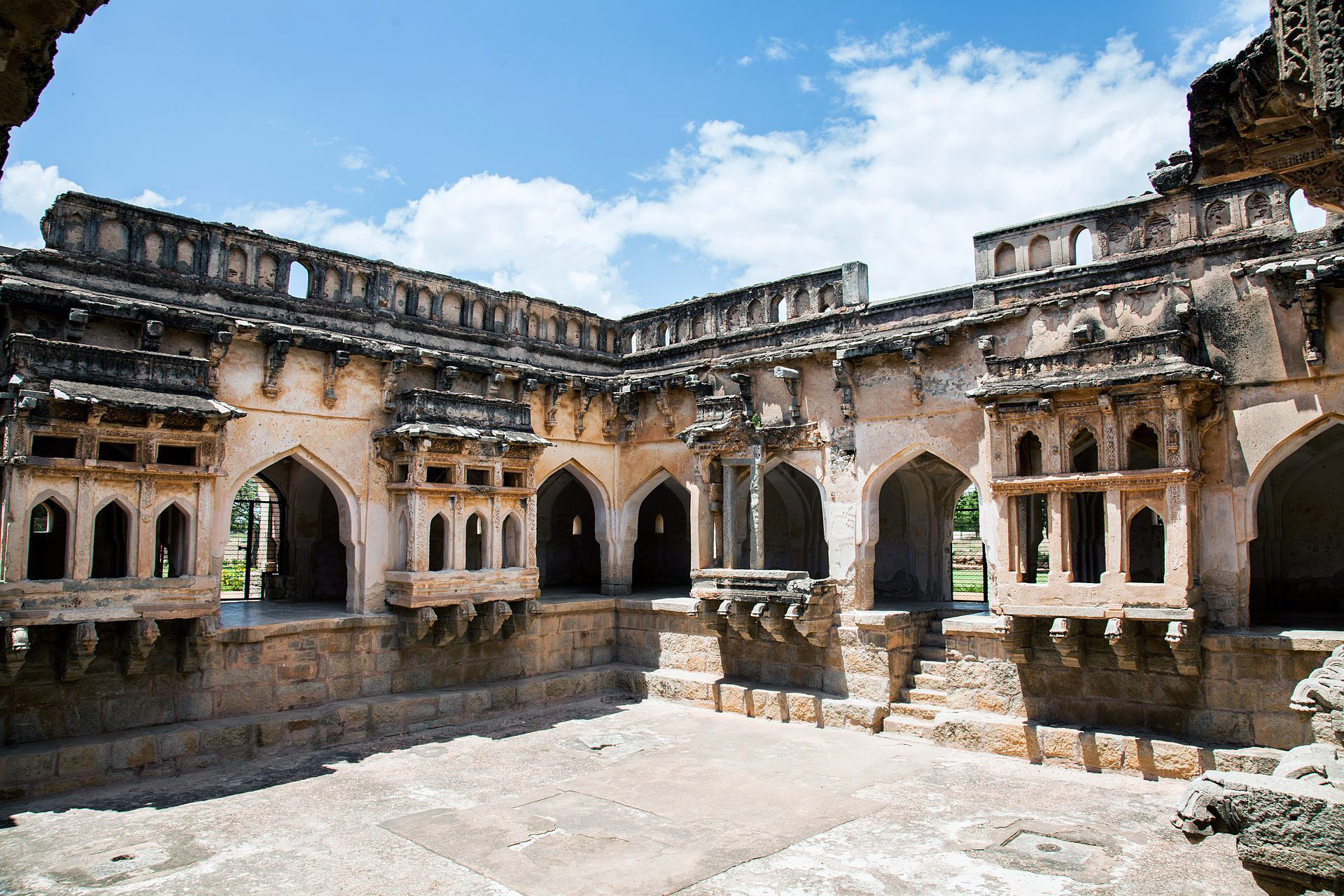
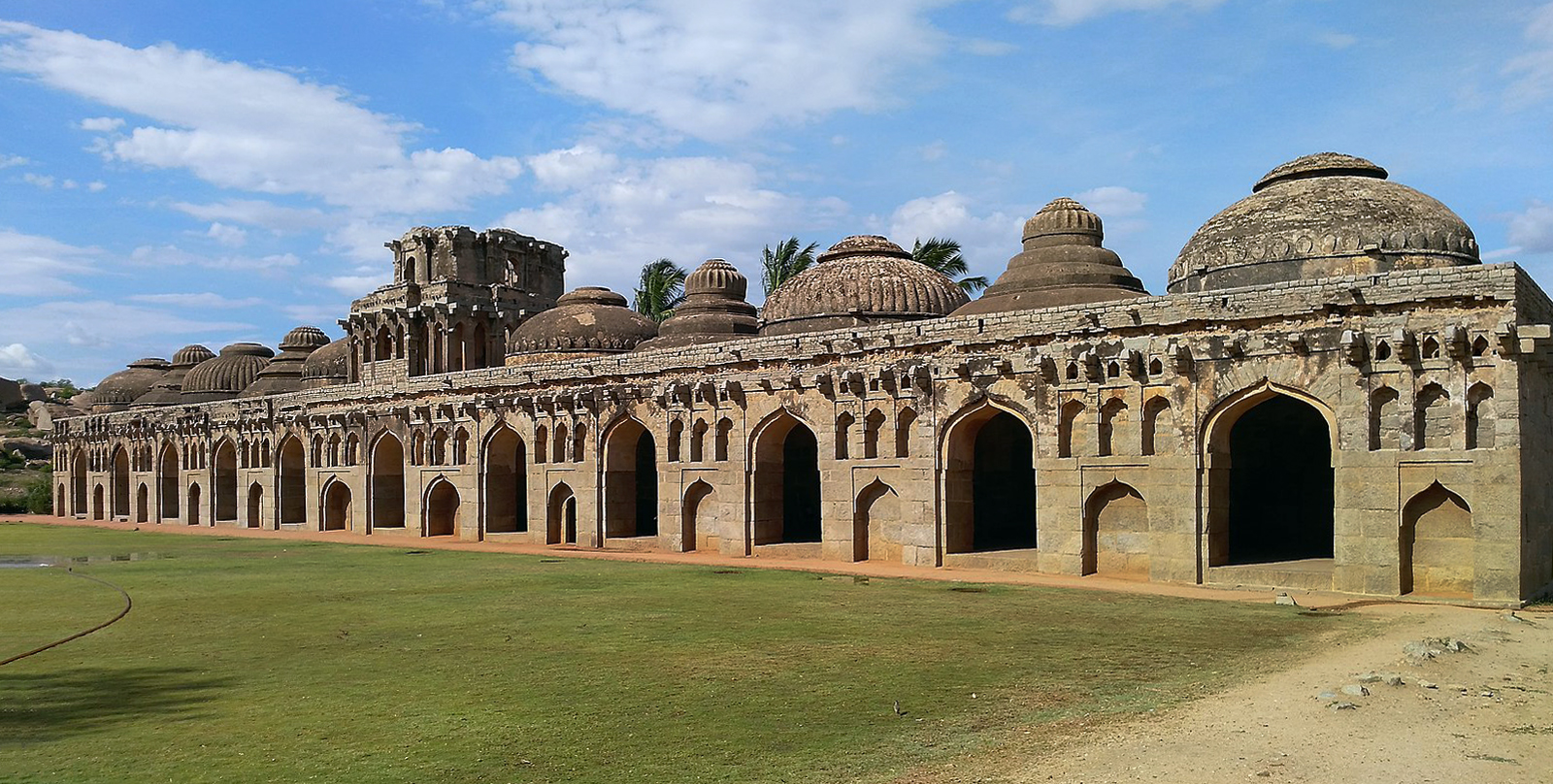
Lastly, the elephant stables were used to house ceremonial elephants. These stables could fit eleven elephants, or twenty-two if two elephants were placed in every stable. The architecture of the stables was the same as the Lotus Mahal. The stables had evidence of multiple religious architectural structures.
France had their own shift in society in the 1700’s. The Rococo art period was a shift away from Classicism and Grand Manner. The best way to characterize the art of this time is a “shift away from the monarchy toward the Aristocracy” (Harris).
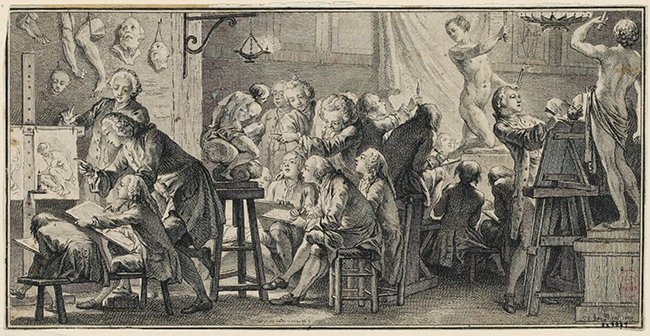
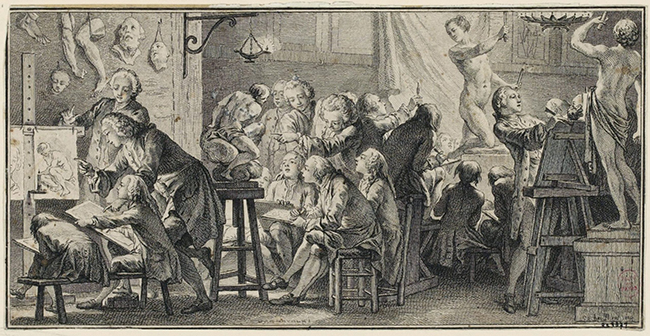
Something important to keep in mind about the aristocracy is that they held enormous political power and enormous wealth. The Académie Royale de Peinture et de Sculpture (Royal Academy of Painting and Sculpture) was the aristocrat’s way of holding control over the arts by allowing certain people to practice art under them and by “establishing a hierarchy over its members” (Harris). Instead of everyone practicing fairly, there were distinct levels of membership, and certain art mediums were favored over others and placed at high importance.
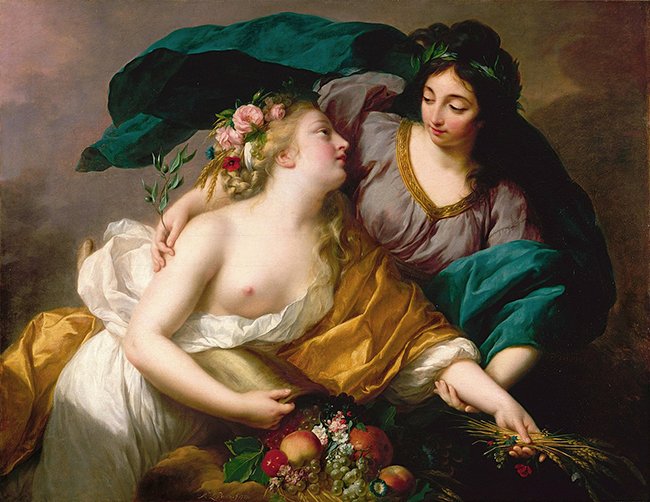
https://cdn.kastatic.org/ka-perseus-images/ca141db7ce8edc8104fc8280effec743c46d3dfe.jpg
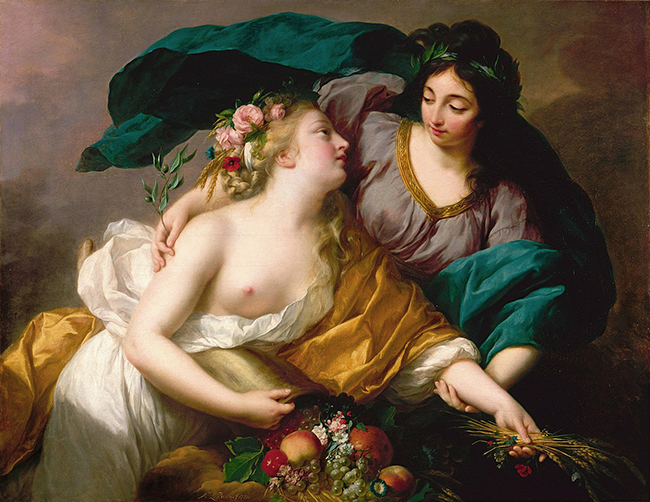
The Academie was also male dominated. Few female painters were accepted and when they were, they were barred from studying the male nude which was a foundational skill in the professional art world in Paris. Eventually, the Academie was brought down because of its rigid rules and was considered irrelevant.
Berman, Dr. Daniella. “The Formation of a French School: the Royal Academy of Painting and Sculpture.” Khan Academy, Date Accessed:28 March 2024, https://www.khanacademy.org/humanities/renaissance-reformation/rococo-neoclassicism/rococo/a/the-formation-of-a-french-school-the-royal-academy-of-painting-and-sculpture
Pai, Dr. Gita. “Art and Architecture of the Vijayanagara Empire.” Smarthistory, The Center for Public Art History, 25 October 2021, https://smarthistory.org/art-and-architecture-of-vijayanagara-empire/
Leave a Reply